Bucket Elevator Chain Supplier Evaluation: Specification Checklist for Cement Plant Procurement
Start with the elevator duty, not the chain catalog
Bucket elevator chain failures in cement plants usually trace back to a mismatch between the chain and the actual duty: abrasive clinker dust, high-speed lifting, wet or sticky material, or peak loads the original specification never captured. Before comparing suppliers, write down the operating conditions that will drive the specification. This checklist is built for procurement teams moving from consideration to supplier evaluation, where the goal is to compare offers on the same technical basis rather than on price alone.
Use the following inputs as the minimum data set for any quotation request:
- Equipment type and series — bucket elevator, clinker conveyor, reclaimer, or other. Note the OEM and model if known.
- Chain pitch and configuration — pitch, number of strands, plate or central chain arrangement, and attachment type.
- Load profile — normal running load, start-up and peak loads, and whether the elevator runs continuously or intermittently.
- Speed — chain speed and whether the duty is high-speed lifting or low-speed heavy-duty.
- Environment — material handled (clinker, cement, raw meal, gypsum), temperature, dust, moisture, and washdown.
- Wear history — where the previous chain failed (pins, bushings, rollers, plates, attachments) and how long it lasted.
Suppliers cannot confirm a matching series without these inputs. A quote that arrives without them is a price, not a specification.
Map the duty to the chain type
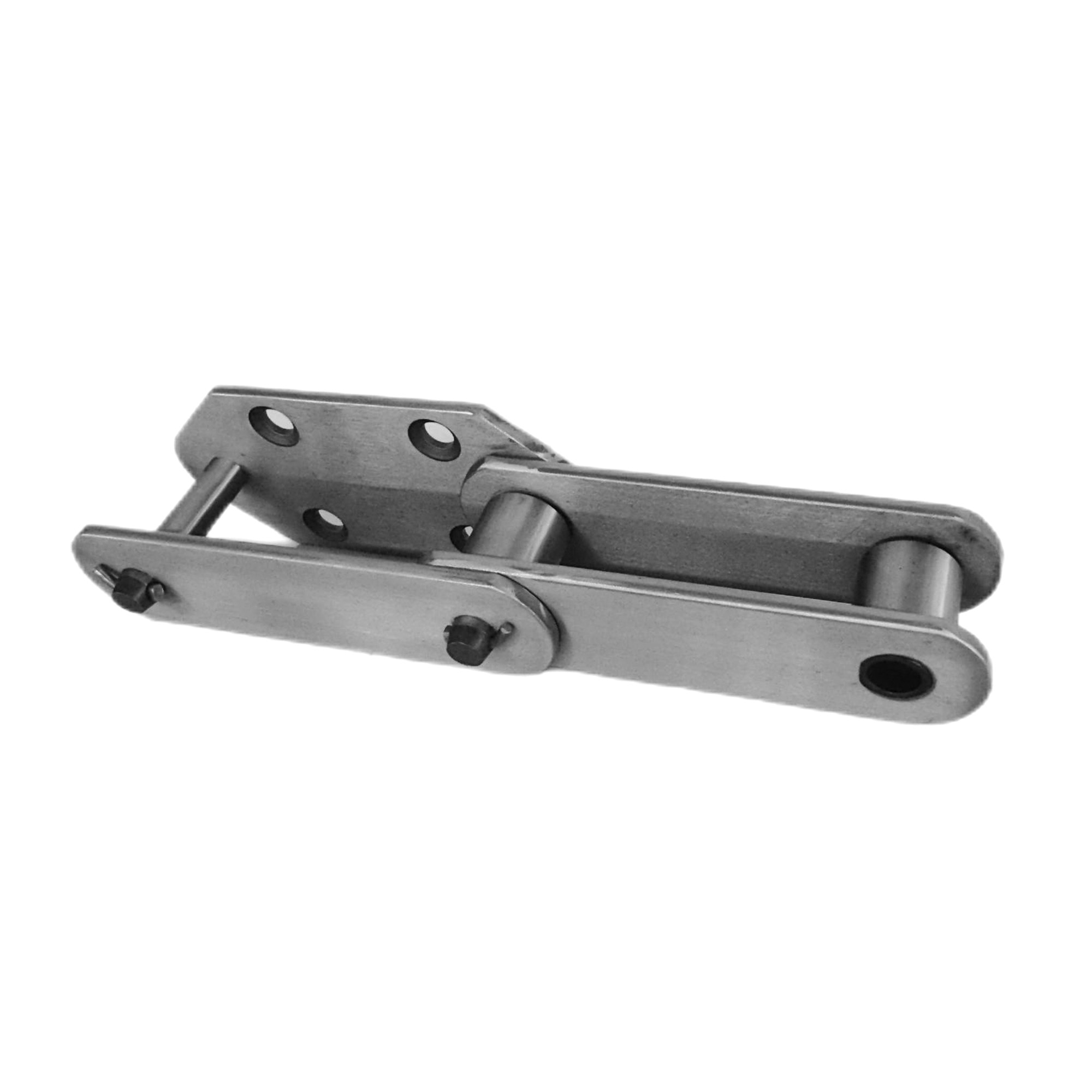
Cement plant bucket elevator chains are not a single product. The main families differ in how they carry load and where they are used. The table below summarizes the typical fit; confirm the final selection with the supplier against your actual duty data.
| Chain type | Typical duty | Where it fits | What to verify |
|---|---|---|---|
| Heavy-duty high-speed hoist chain (e.g., NSE and NSE-W series) | High-speed lifting in bucket elevators | Bucket elevators moving cement, raw meal, or clinker at higher chain speeds | Series confirmation against pitch, load, and speed; attachment compatibility |
| Clinker conveyor chain / bucket machine chain (e.g., SCD and SDB series) | Abrasive clinker and bucket machine duty | Clinker handling where abrasion and impact dominate | Material and heat treatment of pins and bushings; plate thickness; series fit |
| Large pitch low-speed heavy-duty bending roller chain | Low-speed, heavy-load conveying | Slow-moving heavy conveyors where bending and large pitch are required | Pitch, plate and load requirements; roller and pin design for the load |
Two practical rules apply. First, do not substitute a high-speed hoist chain into a low-speed heavy-duty application, or the reverse, without written supplier confirmation. Second, when the elevator handles clinker, treat abrasion resistance as a primary selection criterion, not an afterthought.
Build a specification comparison sheet
Once the duty is mapped, compare suppliers on identical fields. A comparison sheet keeps the evaluation objective and exposes gaps in offers. The fields below are the minimum; add plant-specific requirements as needed.
- Chain type and series — exact series name and whether it is a standard or application-specific design.
- Pitch and strand configuration — must match the elevator's sprockets and attachments.
- Plate and pin dimensions — plate thickness, pin diameter, bushing dimensions, and roller diameter where applicable.
- Material and heat treatment — chain material and the heat treatment of pins, bushings, and rollers. Ask for the process, not just the label.
- Breaking load and working load — both figures, with the basis stated (calculated, tested, or series rating).
- Attachment type and spacing — bucket attachment style and spacing must match the elevator design.
- Matching components — sprockets, pins, and shaft sleeves offered as a matched set or separately.
- Inspection and documentation — what inspection records, material certificates, and dimensional reports are supplied with the order.
If a supplier cannot state breaking load and working load with a basis, the offer is not comparable. Ask again or move on.
Supplier questions that separate capability from claims
Supplier evaluation is mostly about evidence. The questions below are designed to surface how a supplier handles specification, verification, and problem-solving. Ask them in writing and keep the answers with the quotation.
Specification and engineering
- Given our equipment type, pitch, and load requirements, which series do you recommend, and why?
- What are the breaking load and working load of the proposed chain, and how were they determined?
- How do you handle attachment spacing and bucket compatibility?
- What is your recommended inspection interval and wear limit for this duty?
Manufacturing and quality
- Which processes are controlled in-house (for example, heat treatment, assembly, testing) and which are outsourced?
- What dimensional and material checks are performed on finished chain, and what records are provided?
- How do you trace a finished chain back to its material batch?
Supply and support
- What is the quotation basis — per meter, per strand, or per set with sprockets?
- What documentation accompanies the shipment (packing list, inspection report, material certificate)?
- Who provides technical support if the chain does not fit on arrival?
Record the answers in the comparison sheet. Vague answers are a signal to request evidence before shortlisting.
Validate before committing to a full order
For a cement plant, a bucket elevator chain is a critical spare. A staged validation reduces the risk of a full-order mismatch.
- Sample or first-article inspection. Request a sample length or first article and check pitch, plate dimensions, pin and bushing fit, and attachment spacing against the drawing.
- Fit check on site. Confirm the chain engages the existing sprockets correctly and that attachments align with the buckets.
- Documentation review. Match the inspection report and material certificate to the ordered specification before installation.
- Installation and running check. After installation, monitor chain tension, wear at pins and bushings, and any unusual noise or vibration during the first running period.
If a supplier resists a sample or first-article step, treat that as a commercial risk, not a technical detail.
Warning signs in a chain offer
Some offers look complete but leave the buyer exposed. Watch for these patterns:
- No duty data requested. A supplier who quotes without asking for pitch, load, and equipment type is guessing.
- Series names without specification. A series label alone does not confirm fit; ask for dimensions and load ratings.
- Load ratings without basis. Breaking load and working load should be stated with how they were determined.
- No inspection records. Without dimensional and material records, you cannot verify what you received.
- Mismatched components. Chain quoted without matching sprockets, pins, or shaft sleeves can create fit and wear problems.
- Price-only comparison. The lowest price per meter is meaningless if the chain type does not match the duty.
Next actions for the procurement team
Consolidate the duty data into a single request package, send it to shortlisted suppliers with the comparison sheet attached, and require written answers to the supplier questions. Score offers on specification fit, evidence quality, and validation willingness before discussing price. For clinker duty, confirm the clinker conveyor chain series and abrasion-related heat treatment explicitly. For high-speed bucket elevators, confirm the hoist chain series against pitch, load, and speed. The supplier that answers with specifics, not adjectives, is the one worth a trial order.